
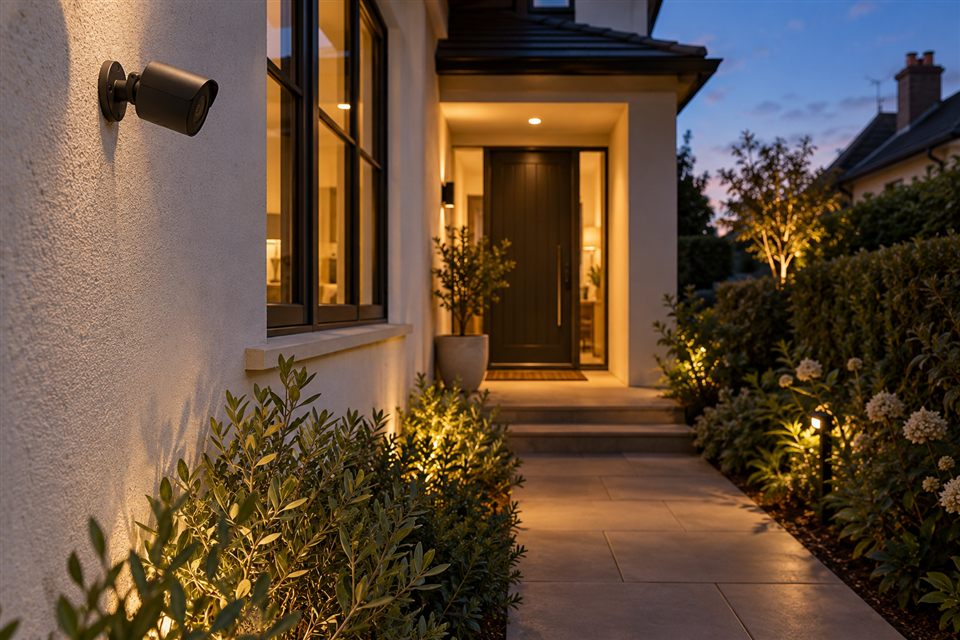
Define a job for each view
Before counting cameras, write a short purpose for every intended position. “Show the approach to the entrance” is a different job from “show the visitor at the door”. A broad garden view can reveal movement while leaving a face too small to interpret. Use a simple sketch to mark entrances, approaches and the areas where you may need to review an event.
An apartment entrance example
For an apartment, begin with the threshold and the direction from which visitors approach. Check whether the doorway is backlit when the hall is bright. Avoid aiming directly across neighbouring entrances simply to widen the view. If the hallway is shared, confirm the appropriate permission and privacy arrangements before mounting equipment. A private doorbell camera and a shared building camera have different responsibilities.
A house or shop needs separate priorities
At a house, distinguish the pedestrian gate, driveway and front door. At a shop, distinguish arrivals from the checkout area. A single camera may not serve all of those jobs. Think through a sample event: a delivery arrives, the person pauses at the gate, then walks toward the door. Identify which view would let you understand each part without covering unnecessary neighbouring space.
Check light, weather and the connection
Visit the proposed position in daylight and after dark. A reflective wall, window or close object can affect infrared illumination. Rain and dust can change outdoor visibility. Wi-Fi signal at a phone is a useful first clue, but the installed device still needs a test under normal use. A cable route, power point and a secure recorder location should be part of the plan.
Placement checklist
Use this checklist before approving the layout.
- Write the purpose of each camera in one sentence.
- Confirm what must be visible, and at what distance.
- Check light from the entrance, street and passing vehicles.
- Confirm a workable connection and power route.
- Avoid unnecessary views of neighbours, private areas or staff workspaces.
- Identify the authorised viewers and recording method.
- Agree a day-and-night check before handover.
Bring the priorities into your request
Describe the areas that matter and the event you want to be able to review. Include the property, city, existing cameras and whether cabling is available. A camera plan can then focus on the actual view and connection rather than a guessed device count.